The AI Build-Out Has a Power Problem. The Power Problem Has a Blind Spot.
Sixty percent of U.S. data centers are one failed cell away from failure.
The U.S. power grid is buckling under the weight of the AI build-out. Even with more than $600 billion slated for 2026 to expand AI capacity, nearly half of the planned U.S. data center builds are projected to be delayed or canceled, with batteries among the equipment cited as key constraints. Gartner projected in 2024 that power shortages will restrict the operation of 40% of AI data centers by next year.
In late 2025, responding to the pressure on the grid infrastructure, the U.S. Department of Energy (DOE) invoked a rarely used statutory authority requiring the Federal Energy Regulatory Commission (FERC) to launch emergency rulemaking to expedite large-load interconnections. Before this DOE action, the latest reliability assessment from the North American Electric Reliability Corporation (NERC), up by more than 1.5 times from the prior projection, pegs summer peak demand growth at 224 gigawatts (GW) over the next decade, driven almost entirely by AI and the digital economy.
When Back-Up Power Becomes a Load-Bearing Infrastructure
The average rack density, across all data center types, is now 27 kilowatts (KW) per rack. A year ago, it was 16 KW. The latest NVIDIA rack-scale system for AI compute nominally consumes 120 KW of power, or about 1.2 gigawatt-hours annually, with direct liquid cooling.
A data center executive approached a major utility in the Eastern U.S. with the requirement for several gigawatts of capacity within two years. They were told it was not possible. Data centers in the United States are forecast to take up to 12% of total electricity demand by 2028, a threefold increase from 2023, according to the International Energy Agency. When capacity is unavailable, uninterruptible power supplies (UPS) become less of a failsafe and more of an active part of data center operations. That changes what it means to operate a battery room.
Periodic Monitoring Undermines Redundancy
Analysis of the U.S. data center market shows that 60% of facilities lack continuous monitoring of their backup battery systems, as data center facilities mostly rely on monthly, quarterly, or semi-annual manual inspections to assess string health.
An example of how the math is unforgiving: Lead-acid batteries can fail within two days of a clean inspection reading. For facilities on quarterly cycles, that means they are blind to potential critical failures 97% of the time. If a cell or string starts degrading between inspections, no one knows, not until the next scheduled check, and not until it’s too late if the grid goes down first.
A single weak cell compromises the entire battery string. The inspection cadence that made sense when the grid was stable is now structurally mismatched to the operating environment.
Just ask Google about its critical battery failure in the UPS system that prevented backup generators from activating in March of last year. More than 20 Google Cloud Services experienced performance issues or went completely dark in their us-east5-c zone.
The irony is that most of these facilities have invested heavily in redundant power architecture: N+1, 2N, modular UPS designs. The redundancy is in place, yet visibility into whether that redundancy is functional is not.
Data Center Operators Can’t Act on What They’re Not Measuring
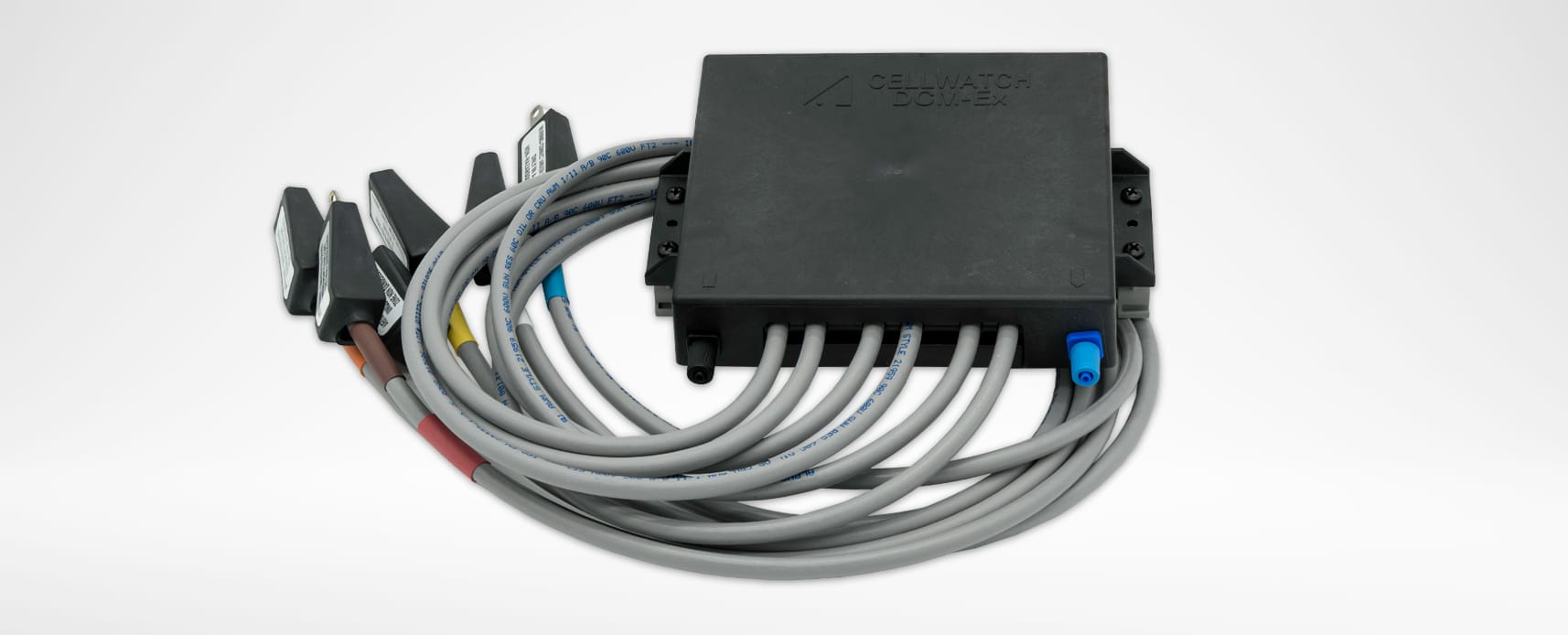
Continuous cell-level monitoring tracks voltage, temperature and internal resistance across battery strings in real time. Degradation trends become visible weeks before failures occur. Operators get earlywarning and enough time to act (schedule maintenance, replace a cell, adjust load) rather thandiscovering a problem mid-outage.
There is also a financial case beyond downtime prevention. Because cells are replaced on conditionrather than on schedule, healthy cells stay in service rather than being pulled in bulk replacements. Thatextends useful battery life by two to five years beyond the rated lifetime, with no compromise to powerintegrity. This represents a material reduction in lifecycle equipment costs and a significant easing ofprocurement pressure during capital-constrained budget cycles.
Modern continuous monitoring platforms connect directly to building and network management systems using standard protocols. Such platforms provide real-time visibility into cell‑level health across battery strings rather than a snapshot taken during a scheduled walkthrough. Generator start batteries are among the most consistently overlooked links in the critical power chain. They may be idle for months, rarely tested or monitored and invisible to most inspection regimes.
The physical environment adds another layer of risk that periodic inspections cannot adequately address. Battery rooms where large lead-acid banks are actively charging generate hydrogen as a byproduct, and hydrogen becomes flammable at just 4% concentration in air. Facilities relying on scheduled walkthroughs to detect emerging issues in those environments are operating blind between inspections. They are also exposing personnel to conditions that continuous remote monitoring exists precisely to eliminate. IECEx-certified monitoring hardware now extends that continuous visibility into classified explosive-atmosphere environments without the bulky enclosures and installation complexity that previously made instrumentation cost-prohibitive in those spaces.
Flying Blind is How Data Centers Go Dark
Supply chain lead times on batteries, transformers and switchgear are already delaying builds. The operators who instrument their battery infrastructure now, those who build continuous visibility into their backup systems before the next grid event, will have an operational advantage that cannot be quickly replicated.
Oxford Economics calculated that, on average, unplanned downtime costs Global 2000 enterprises up to $9,000 per minute or $400 billion annually, with power and cooling failures among the leading root causes. A battery string that fails silently between quarterly inspections is a predictable outcome of a monitoring model that was never designed for the reliability demands now placed on backup power systems.
The regulatory environment is tightening in ways that make battery health both a compliance and an operational issue. The NERC issued a Level 2 Industry Recommendation last September that explicitly named data centers as a bulk power system reliability risk, following an incident in which a single fault within the facilities’ internal power backup systems caused 1.5 gigawatts of data center load to drop off the grid. Separately, the NERC FAC-002 standard now requires full reliability studies that account for how backup power behaves during disturbances. A UPS battery string with degraded cells that disconnects from the power grid under stress is no longer just a facilities problem.
The grid is under pressure. Backup power is load-bearing. Sixty percent of U.S. data centers still aren’t watching their batteries closely enough. The measurement gap and the reliability gap share the same power blind spot.

Chris Belcher, Senior Cellwatch Product Line Manager
Chris Belcher has over two decades of industry and technical expertise in battery monitoring and is responsible for the Cellwatch Battery Monitoring system portfolio at Parameter. Belcher holds a degree in electrical and computer engineering from North Carolina State University.