
Oil & Gas
The oil and gas industry is responsible for making hydrogen and petroleum resources available for use as power generation and heating resources. Its operations involve a network of facilities including power generation facilities, oil rigs, maritime vessels, and pipelines. These environments often involve high explosive risks and need to comply with federally mandated precautions.
Delivering a continuous supply of power to equipment and maintaining safety in hazardous environments is a primary concern within the oil and gas industry. Technicians need a way to achieve constant visibility of battery health within hazardous zones.

Monitoring
Considerations
Hazardous Environments & Explosion Risks
Flammable gases such as well gases, vapors, and hydrogen sulfide carry severe flammable hazard and explosive risks. To mitigate accidental ignition, oil and gas operations must comply with federal regulations to isolate hazardous zones and remove potential ignition sources.
Federal Regulations
Oil and gas applications must comply with federal regulations to decrease risk of incendiary events, such as IECEx or C1D1 standards in North America, or ATEX in the European Union. These regulations require specific precautions be taken in hazardous environments or around flammable materials.
UPS Systems & Generators
Oil and gas facilities, including oil rigs, primarily draw power from diesel engines or gas generators, including for the vital equipment that processes and contains hazardous materials. When these power sources are temporarily unavailable, they rely on battery-based Uninterrupted Power Supply (UPS) systems and SLA generators to maintain constant functionality.
Technician Exposure
To mitigate risks and comply with worksite safety regulations, oil and gas companies need to reduce technician exposure to hazardous materials. By deploying autonomous or remotely controlled systems can minimize time spent in hazardous zones.
Pumps & Compression Systems
Oil and gas pipelines use a network of pumps and compression systems to carry oil upstream from wellheads. DC batteries provide a reliable source of backup power when these mechanisms fail, but because they are typically located remotely and difficult to access, they are challenging to maintain.
DC Transformers
Some oil rigs incorporate motors that run on DC power from battery banks. These models use transformers to convert electrical energy from batteries into mechanical energy for critical mechanisms.

Battery Monitoring
The oil and gas industry relies on critical operations that must maintain uptime and energy integrity, and failures of equipment designed to support the handling of hazardous materials can represent potentially deadly regulatory violations, making reliable battery systems non-negotiably crucial.
Battery failures can happen unexpectedly between manual checks, and a single cell failure can compromise an entire string. Since backup units are only deployed occasionally, technicians often don’t realize that a failure has occurred until it’s too late.
Oil and gas companies can ensure UPS and DC battery integrity by remotely tracking battery performance in real time, even within hazardous environments. Parameter’s Cellwatch Battery Monitoring platforms automate the battery monitoring process to ensure constant power availability and alert to early signs of failure or thermal runaway.
Benefits include:
- Real-time tracking of critical units
- Reduced risk of unexpected outages
- Streamlined repairs and deferred replacements
- Increased cost savings and maximum battery life
- Tailored solutions for oil and gas applications
Product Lines


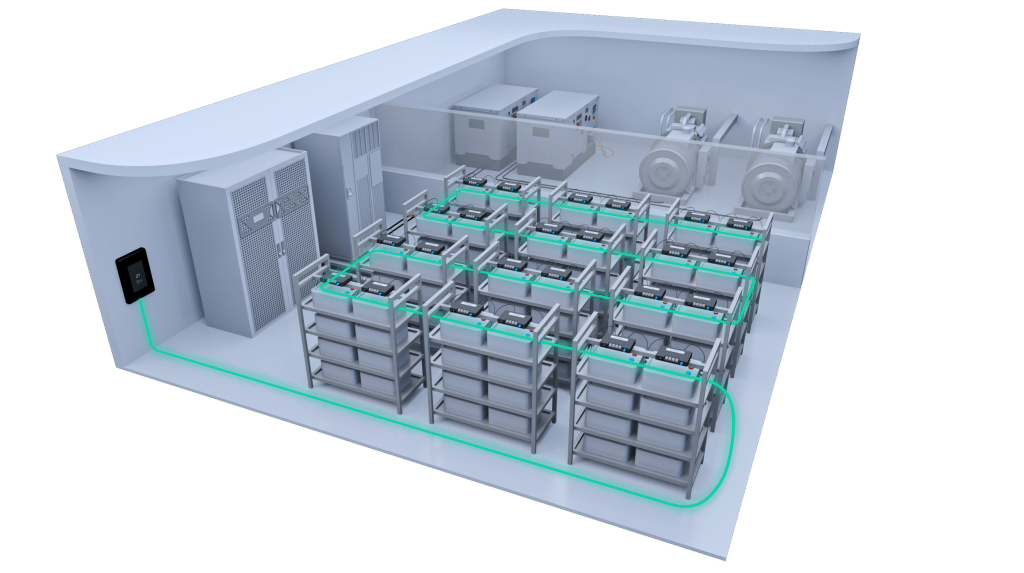
As the core Cellwatch product, Cellwatch Battery Monitoring serves as a secure and flexible preemptive battery maintenance solution for UPS applications in power generation plants and other gas and oil processing facilities. Cellwatch Battery Monitoring utilizes advanced measurement techniques to continuously monitor entire systems and provide extremely accurate readings throughout charge, discharge, and float periods.
Comprehensive UPS Visibility
Cellwatch Battery Monitoring is tailored for UPS applications. In addition to functionality for alerting against and preventing thermal runaway, the platform tracks string voltage, cell level voltage, ohmic value, and current temperature to identify cell failures within a UPS string.
Early Failure Warning
By passively monitoring critical units in real time, Cellwatch Battery Monitoring alerts to failures as soon as they occur, providing technicians with enough time to replace and repair failed batteries before they need to be deployed and ensuring all vital systems have a steady supply of power.
Thermal Runaway Prevention
With functionality for tracking and preventing thermal runaway, Cellwatch Battery Monitoring helps oil and gas companies meet IFC 1206.27 and NFPA 70 requirements by mitigating ignition risks in hazardous zones.


Cellwatch Frontier is optimized for oil and gas corporations that need to manage DC distribution across facilities and stations that rely on remote or autonomous control. By testing remote DC units daily and reporting on performance, the Frontier platform reduces unexpected outages and strengthens continuous power availability.
Remote DC Monitoring
Unmanned stations and hazardous zones may need to run with minimal in-person supervision, but they still require 24/7 monitoring. Cellwatch Frontier features remote monitoring capabilities to limit onsite visits while ensuring smooth and secure operations.
Optimized for Hazardous Environments
Parameter’s DCM6-L-IECEx battery monitoring module is rated for Zone 1 and Zone 2 explosive hazard zones and meets all explosion requirements for hydrogen and other IIC gas groups. Low-profile and easily integrated with native systems, the DCM6-L-IECEx requires no critical maintenance and features fully integrated Data Collection Modules.
Simple & Low-Profile Installation
To facilitate safe, quick, and easy set-up in hazardous zones, Cellwatch Frontier supports simple plug-and-play installation with identical modular components for all configurations.


Oil and gas corporations often need to manage data across multiple separate facilities. Cellwatch Central is optimized for large organizations with multiple installation sites and complex data analysis needs.
Real-Time Visibility
Cellwatch Central is semi-permanently connected to deliver continuous passive monitoring that tracks performance proactively, allowing personnel to repair or replace battery units efficiently before they need to be deployed.
Preemptive Maintenance & Cost-Savings
By providing real-time visibility into battery performance, Cellwatch Central streamlines preemptive maintenance to increase backup power reliability, achieve cost savings, and maximize useful battery life.
Complex Data Consolidation
By collecting data from multiple sites and consolidating it into a single system, Cellwatch Central enables oil and gas corporations to analyze battery performance across over 50,000 jars and manage battery types, installation data, and maintenance events via a unified system.
Discover Advanced Oil & Gas Monitoring Solutions From Parameter
Not only can the right monitoring system alert to failures, but it can also enable incident prevention, enhance efficiency, increase cost savings, and deliver peace of mind.
Contact Parameter to discover flexible battery monitoring solutions for oil and gas infrastructure that check all these boxes.