
Military & Government
Military and government facilities carry out vital administrative and defense functions. Because of the sensitivity of their missions and the demanding conditions in which they operate, military and government technology must have built-in resilience, security, and flexibility at every level.
In addition to data storage systems that are resistant to interference and cyber threats, they need to be able to rely on a steady flow of power from UPS battery banks and off-grid substations at all times.

Monitoring
Considerations
Control Centers
UPS Systems
Military and government control centers play an essential role in managing responses to conflicts and emergencies, so they rely on Uninterruptible Power Supply (UPS) systems to remain operational at all times. These systems utilize battery units to provide continuous power when primary electrical sources aren’t available, ensuring control centers can function during outages.
Off-Grid DC Substations
Because of their significant security requirements, military and government control centers typically rely on power from substations outside of the grid. Substations involve a complex network of protective relays, breaker trip currents, and other vital systems that depend on uninterrupted DC battery supply.
Communication Networks
Communication networks deployed by military and government control centers encompass Wi-Fi, digital radios, satellite communications, integrated communications systems, and decentralized mesh networks. For effective communications to take place, all of these networks must be fully secure and accessible to personnel at all times, including during outages and emergencies.
Server Rooms
Server rooms in military control centers host the data collection and monitoring that informs critical decision-making. They process sensitive and confidential intel and have high standards for security and data integrity. To run optimally, factors like temperature, humidity, and leaks must be carefully controlled to avoid system failure.
Military Bases
Private Grid Systems
Many military bases are powered by private grid systems, which operate independently of the civilian grid for maximum security and resilience. These grids incorporate DC batteries, solar panels, and diesel generators for continuous availability.
Internal Communications Networks
Remote DC plants provide network connectivity in areas that fall outside of the cell tower grid. These plants need to maintain constant availability with minimal onsite supervision, and they often incorporate battery backup systems that can be deployed when primary power sources are down.
Generators
Battery-powered generators on military bases play a role in providing back-up power for continuity during grid outages. They may also be primary power sources for communications, data processing, and climate control in some facilities.
Active & Environmental Threats
The sensitive operations that take place on military bases make them targets for active security breaches, though environmental threats like temperature extremes and weather events can also interfere with operations. Military bases need to prioritize prompt and diligent response to all types of threats.

Battery Monitoring
Successful military and government operations depend on technology that is both secure and constantly available, and much of their vital equipment draws primary or backup power from battery banks.
However, DC batteries are prone to unexpected failures, and even a single failure and compromise and entire string. Without a way to track performance in real time, military and government facilities can’t trust their battery infrastructure to be reliable.
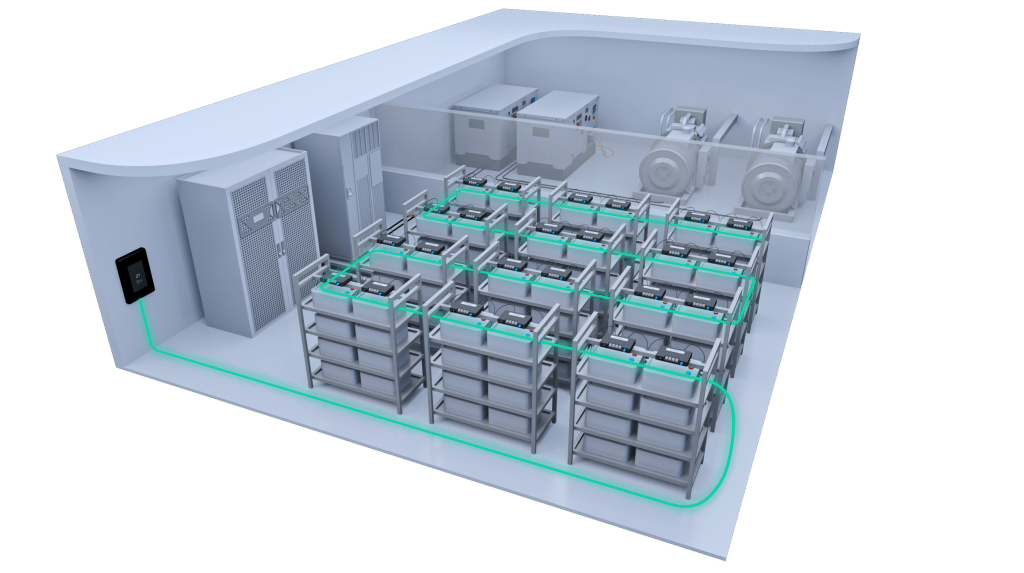
Control centers and military bases can ensure UPS and battery integrity by implementing a comprehensive battery monitoring system that is semi-permanently connected to provide live insights into battery performance. Parameter’s Cellwatch Battery Monitoring platform measures multiple conditions, alerts to failures, and delivers live data on critical units.
Capabilities of Cellwatch Battery Monitoring include:
- Real-time tracking of critical units
- Interoperable plug-and-play installation
- Secure management of battery health data from multiple strings and units
- Enhanced UPS reliability and reduced risk of outages
- Immediate identification of failing cells for efficient repairs and replacements
Environmental Monitoring
In military and government facilities, extensive visibility that encompasses vigilance against active threats to security is vital. Environmental threats and security breaches from external forces can be subtle and can compromise critical operations.
Parameter empowers military and government entities with comprehensive visibility into essential aspects of facility security.
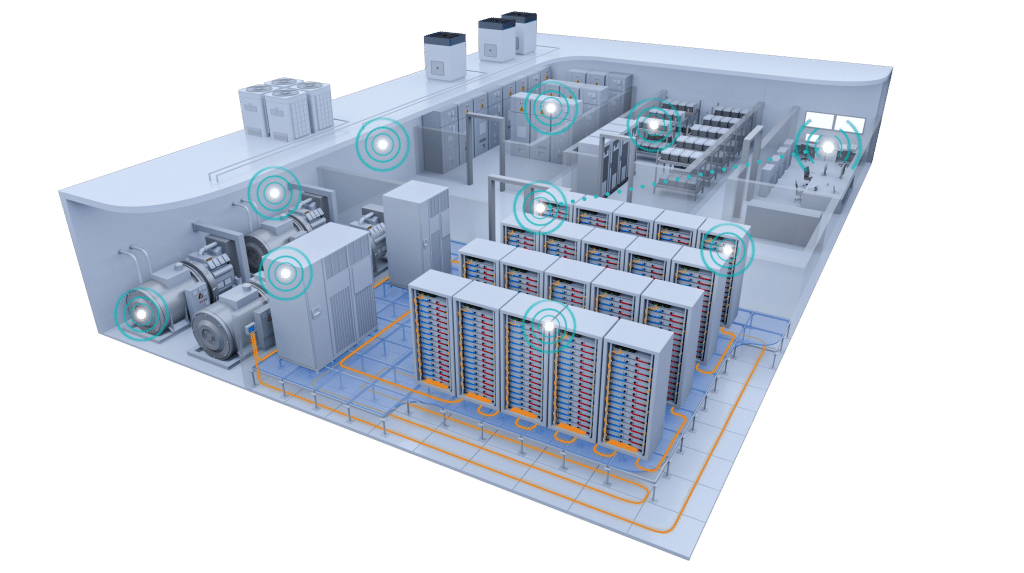
Parameter’s environmental monitoring technology tracks multiple conditions, including temperature, humidity, airflow, CO2, smoke, motion, door status, and more. When a failure is detected, the system sends an immediate alert indicating the nature and location of the issue.
Capabilities of Parameter RLE Environmental Monitoring include:
- Reliable and accurate threat detection
- Remote monitoring functionality
- Seamless integration with native BMS
- Enhanced data-driven decision-making
- Wireless, Wi-Fi, and wired technology options
Leak Detection
Cooling units, HVAC infrastructure, and plumbing are crucial parts of maintaining optimal conditions in military control centers and data rooms, but collapses can cause flooding around sensitive equipment.
Even small leaks can escalate quickly to affect multiple areas. By catching leaks early, military and government facilities can safeguard data integrity against damage.
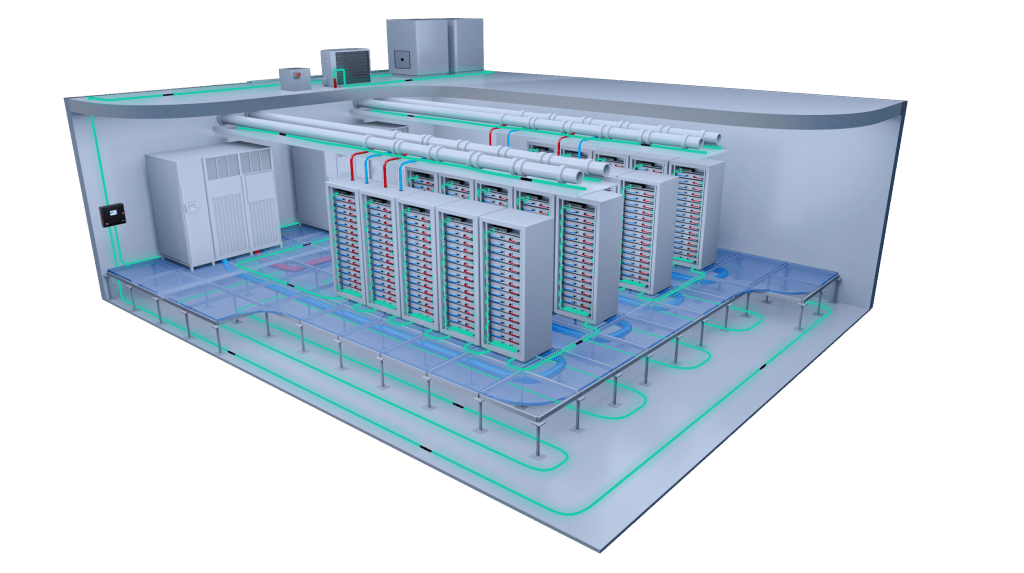
Our technology detects leaks as soon as they occur, ensuring personnel have enough time to respond to them before they spread. Like all Parameter product lines, RLE Leak Detection supports native protocol conversion for seamless integration with legacy systems, making it easy to install without requiring a full overhaul of existing infrastructure.
Capabilities of Parameter RLE Leak Detection include:
- Accuracy of ±2 feet / ±0.5% of cable length with map-applied distance read
- Extensive detection along 10,000 feet of detection cable
- Wireless range up to 1600 feet
- Long-lasting, resettable, and reusable detection cables
- Real-time alerts
Product Lines


As the core Cellwatch product, Cellwatch Battery Monitoring serves as a secure and flexible preemptive battery maintenance solution for military and government UPS applications. Cellwatch Battery Monitoring utilizes advanced measurement techniques to continuously monitor entire systems and provide extremely accurate readings throughout charge, discharge, and float periods.
Real-Time Visibility
Cellwatch Battery Monitoring is semi-permanently connected to deliver continuous passive monitoring that tracks performance proactively without the need for manual checks, allowing personnel to repair or replace UPS battery units before they need to be deployed.
Plug-and-Play Installation
For military and government applications in which flexibility and interoperability are priorities, all Cellwatch Battery Monitoring systems are designed for easy, fast, and safe plug-and-play installation with identical modular components for all configurations. Cellwatch Battery Monitoring also facilitates streamlined Modbus SNMP integration.
Secure Data Collection
With a high degree of security embedded at every level, Cellwatch Battery Monitoring tracks string voltage, cell level voltage, ohmic value, and current temperature to identify cell failures within a UPS string.


Parameter’s RLE Environmental Monitoring product line is designed to help government and military facilities maintain security and control in data rooms and other sensitive areas by tracking critical factors and alerting to failures. With wired, wireless, and Wi-Fi platforms available, our systems ensure streamlined integration through user-friendly interfaces.
WiNG Monitoring
Parameter’s hyper-convenient and reliable WiNG wireless platform is as simple to install as placing a magnet on a doorframe. The platform features sensors for dozens of environmental conditions and automatically relays continuous data to the WiNG Manger, allowing business to meet efficiency goals, maintain equipment performance and optimize operations by fine-tuning server environments. There are no recurring fees, and once you’ve purchased the equipment, it’s yours for life.
Wi-Fi Sensors
Parameter’s Wi-Fi sensors enable operations to leverage existing Wi-Fi networks to consistently and accurately monitor conditions such as temperature, humidity, CO2, airflow, and leaks.
Wired Facility Monitoring & Sensors
For operations that require the utmost security, Parameter simplifies closed-circuit monitoring through the wired Facility Monitoring System (FMS), which monitors sensitive facilities, temperature, and equipment status. To expand FMS functionality, Parameter offers wired sensors for temperature, humidity, motion, door status, smoke, power failures, and power currents.


Ideal for military and government applications, Parameter's RLE Leak Detection technology alerts to everything from small spills to major flooding as soon as liquid is detected, providing personnel with plenty of time to resolve the issue before it spreads. Parameter offers leak detection solutions for both chemical and conductive fluid leaks.
Liquid Sensing Cables
Parameter’s conductive fluid sensing cables can be run around the perimeter of a room or in a serpentine pattern under the floor for comprehensive coverage of server rooms and other workspaces. For chemical applications, Parameter’s chemical sensing cables are exceptionally reliable, resistant to corrosion, and offer an especially fast reaction time.
Spot Detectors & Zone Controllers
For readily visible areas such as HVAC drips pans, floor drains, and condensation outlets, Parameter’s simple and cost-effective zone controllers and spot detectors notify personnel as soon as a leak is detected in a specific area. For more complex spaces, distance-read controllers can identify the precise location of a leak or spill.
Discover Advanced Military & Government Monitoring Solutions From Parameter
Not only can the right monitoring system alert to failures, but it can also enable incident prevention, enhance efficiency, increase cost savings, and deliver peace of mind.
Contact Parameter to discover flexible battery monitoring solutions for military and government infrastructure that check all these boxes.