Description

The MCU is the secure central hub of the XD system and contains the interfaces to the facility (BMS/CMS) and the interfaces to the downstream Monitoring Distribution Units (MDUs).  Users can fully configure and manage the system via a web UI.  The MCU brings distributed leak detection into a single operational view. It supervises up to 64 Monitoring Distribution Units (MDUs) and 2,048 Monitoring Sensor Units (MSUs), consolidating Warning, Leak Alarm and Fault events so operators can identify the affected device and sensing channel across their monitored areas. 

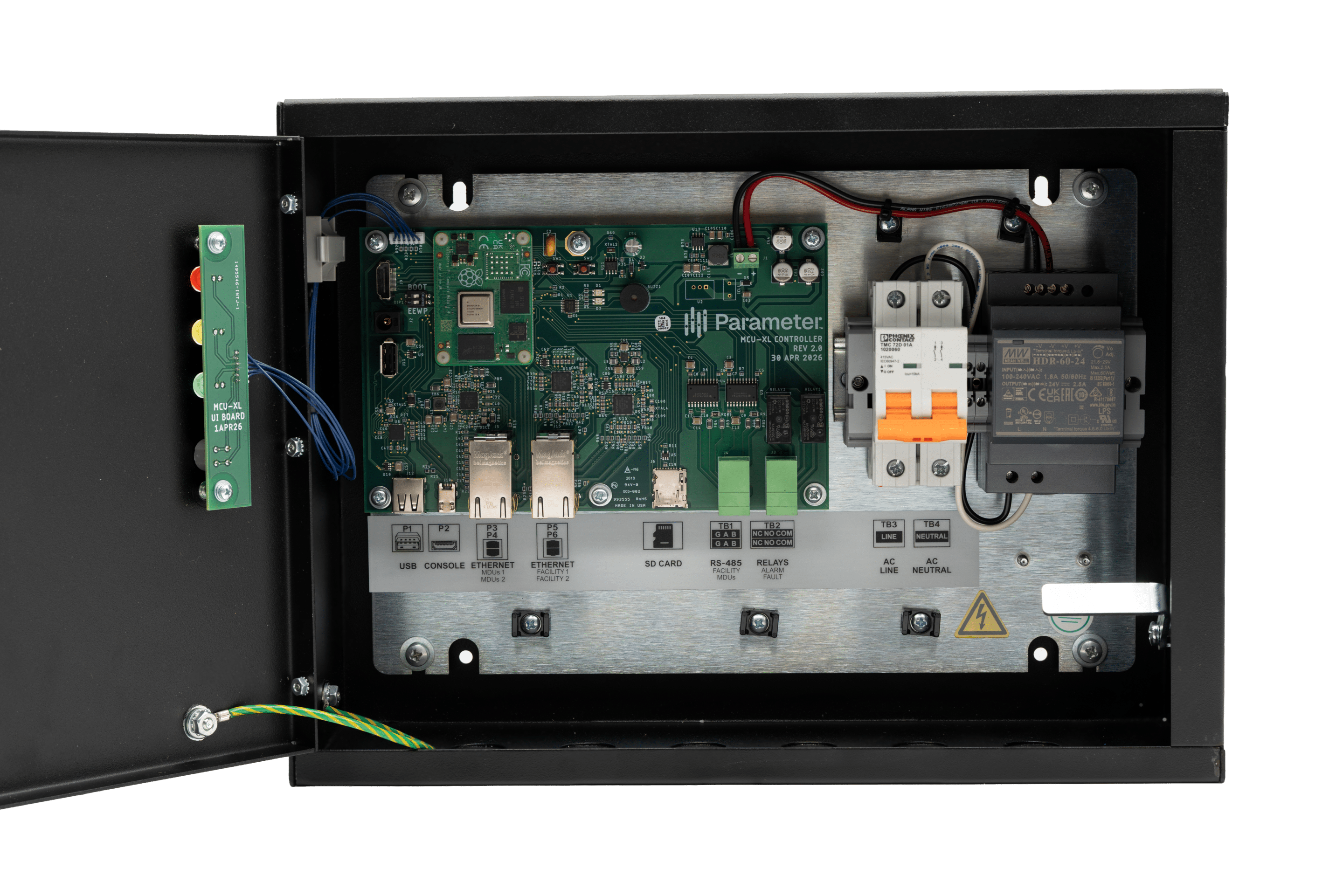
Through the integrated web interface, users can monitor system health, review live sensor readings, configure thresholds and apply settings to multiple compatible devices.  The MCU connects leak monitoring to facility operations through BACnet, Modbus, MQTT and SNMP.  Separate facility and MDU networks each have two Ethernet ports to support redundancy, with RS-485 available as an alternative link. Relay outputs and configurable audible and email notifications support site response procedures. User management, audit logging and HTTPS/MQTT certificate management support controlled access and traceability. 

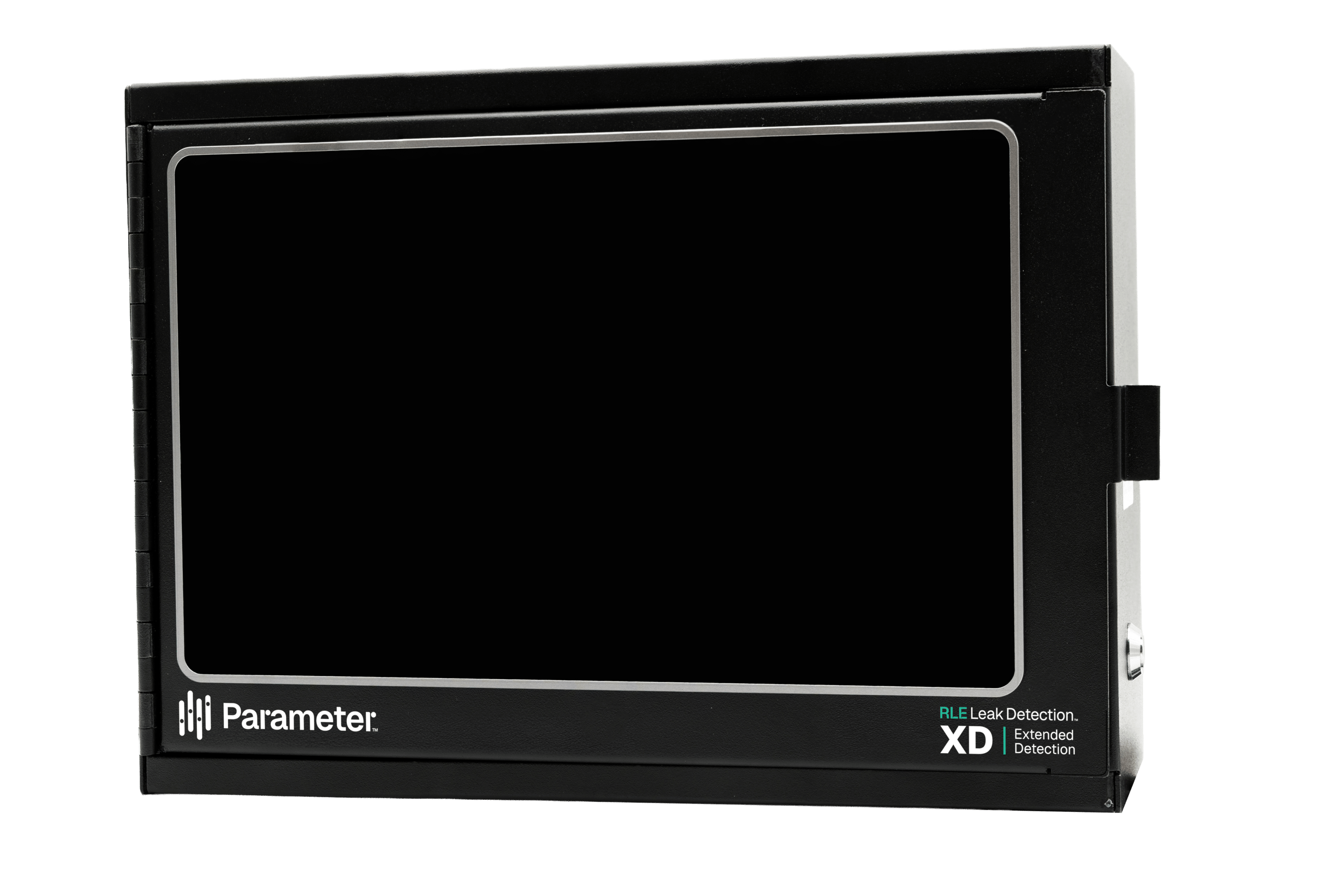
Both MCU models provide the full browser-based monitoring and configuration interface. The XD-MCU-6400TX adds an integrated 11.6-inch touchscreen displaying the same information for local operation; the XD-MCU-6400X provides front-panel status LEDs. This gives facilities a choice of local display options within the same management platform. 
Product Documentation

Key Features 

  • Scalable Digital Monitoring Hub 
  • Easily scales from one leak zone to multiple data halls with a consolidated alert ecosystem that integrates with BMS/CMS.​​ 
  • Supports up to 64 MDUs, up to 2,048 MSUs, via either Ethernet or RS-485. 
  • Massive Scaling — up to 8,192 spots/ropes or 204,800 feet of sense rope. 
  • Integrated web interface 
  • MQTT native publisher 
  • Seamless integration with BMS via:  MQTT, Modbus, BACnet, SNMP 
  • Dual Ethernet port bonding support to facility and to MDUs for redundancy (802.3ad LACP, LAG, MLAG) 
  • RS-485 connectivity to facility and MDUs 
  • Integrated Relay outputs for Leak and Fault


Technical Specifications

Communication Ports

  • Ethernet Ports: 2x 1000BaseT Ethernet port, RJ45
  • EIA-485 Port: 9600/19200/38400/57600/76800 baud; No parity, 8 data bits, 1 stop bit

Communication Protocols

  • Modbus/TCP, Modbus RTU (RS-485) 
  • MQTT Message Queuing Telemetry Transport, pub/sub interface, certificate-based security 
  • BACnet/IP, BACnet MS/TP (RS-485) 
  • SNMP V1, V2, V3

User Interface

  • Integrated 11.6” FHD 1920×1060 LCD display touchscreen
  • 3 LEDs:  Red (Alarm), Yellow (Fault) and Green (Ok) – Pushbutton to silence alarm
  • Integrated webserver interface with certificate-based TLS encryption

Scaling

  • MCU supports up to 64 Monitoring Distribution Units (MDUs)

Relay Outputs

  • 2x Form C Relays,1 for Alarm, 1 for Fault; 5A @ 30VDC or 10A @ 250 VAC – Configurable for supervised or non-supervised modes

Logging

  • 5,000 events, FIFO, CSV download 

Security

  • Comprehensive enterprise-class security features spanning security event logging, password complexity requirements, cryptographic algorithms, SBOM management, common vulnerability evaluation, binary analysis, malformed input resistance, boot process authenticity, authentication bypass difficulty.  Additional security features include device qualification prior to acceptance into the network and rotating security certificates

Operating Environment

  • Temperature: 32° to 122°F (0° to 50°C)
  • Humidity: 20% to 80% RH, non-condensing
  • Altitude: 10,000ft (3048m) max 
  • Storage Temperature: -4° to 158°F (-20° to 70°C)  

Dimensions

  • 13.8”W x 10.1”H x 8.9”D (350mmW x 257mmH x 227mmD)

Weight

  • 6400TX:  15.2lbs. (6.9kg), 6400X:  11.9lbs (5.4kg)

Mounting

  • Wall mount with 4 screws 

Certifications

  • cTUVus: conforms to UL 61010-1, EN 61010-1; certified to CSA C22.2 NO. 61010-1; CE, UKCA RoHS compliant 


Switch for MCU to MDU interface 

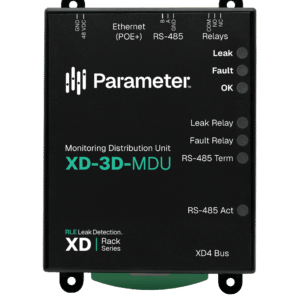
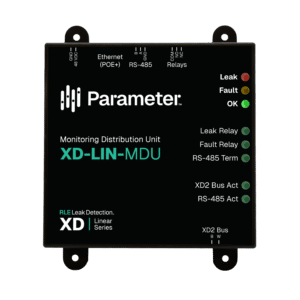
The MCU can communicate with the MDUs either over Ethernet or RS-485 .  MCU to MDU communication via Ethernet requires ports on a switch.  If the switch has PoE+ ports, then the MDUs can be powered from the PoE+ switch.  Use approved external 48VDC power supply for non-POE+ network or RS-485, or if power redundancy is desired if POE+ network is overloaded. 

Specs for Switch for MCU/MDU interface: 

  • 1000BT ports for Ethernet connection of MDUs to the MCU 
  • One port on the switch is required for each MDU  
  • Additionally, the MCU will require 1 or 2 ports depending on the Bonding mode in use (see the Bonding  modes description above). 
  • If you plan to power the MDUs from the switch, then the ports for the MDUs need to have PoE+ support. 
Copyright 2026 Parameter