SNCF (French National Railway)

Link to PDF Version

Situation

Operating large multi-site rail systems requires a mission critical solution where every site can be relied upon to perform at all times. With disperse locations the cost of operations is significant and unmonitored systems can hide potential problems until the moment of truth. The cost of losing power is measured in millions of Euros. As transportation services grew and IT systems expanded, data center technicians for France-based SNCF (French National Railway) realized the significance of preventing their reservations and ticketing networks from going offline. In 2000, the organization installed its first battery monitoring system to prevent an unplanned outage. After nearly five years of false alarms and struggling to manage their batteries effectively with two different battery monitoring solutions, the battery monitoring system was removed and evaluations of another system began.

Strategy

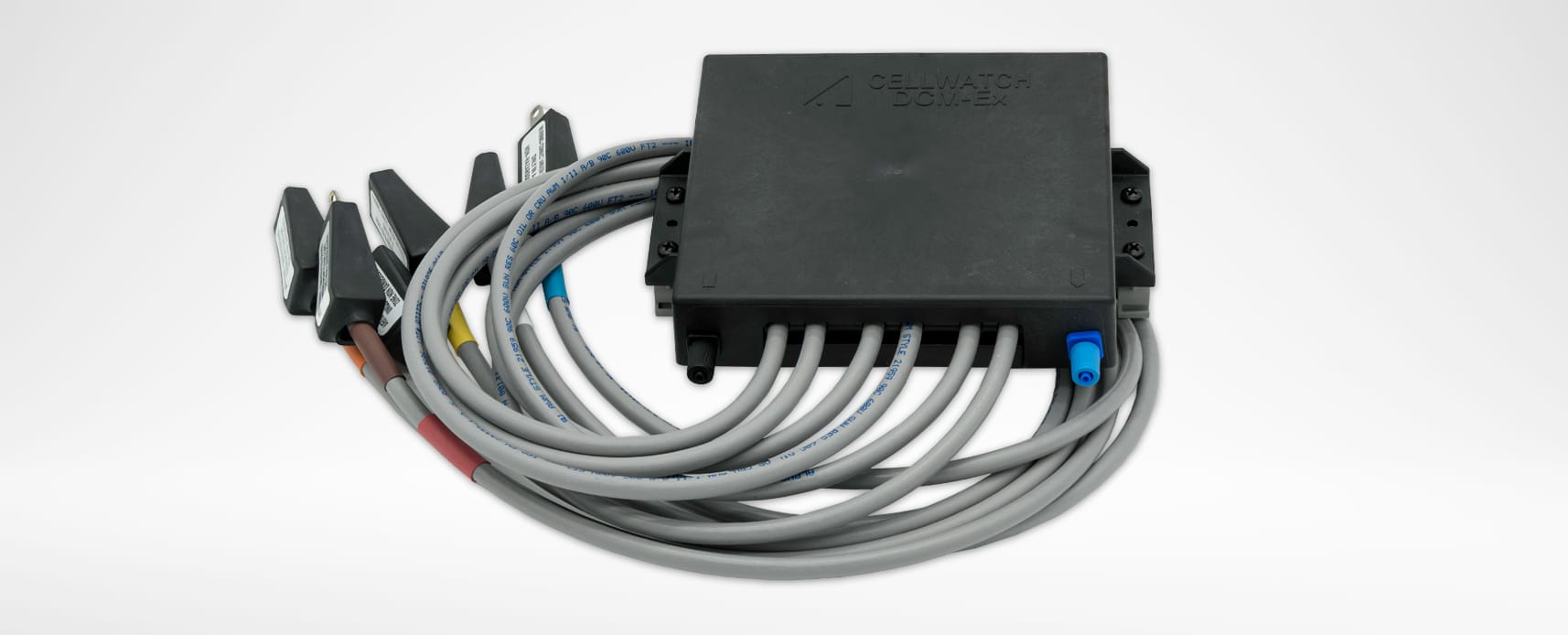
In 2006, a Cellwatch® battery monitoring system was selected because of its ability to provide continuous monitoring of ohmic value, voltage and temperature, providing complete visibility of battery status, and delivering immediate notification of any faults. Shortly after installation, Cellwatch triggered an ohmic alarm on three jars that had just been installed twelve weeks earlier. Had Cellwatch not discovered the failing jars, the data center could have experienced a complete system failure with what they believed to be healthy batteries supporting their backup systems.

Results

Because of the data that Cellwatch provided, data center technicians were able to submit a report along with the failed jars to the battery manufacturer. The manufacturer confirmed what the Cellwatch data reported. Based on its stellar performance and financial benefits Cellwatch battery monitoring systems are now required to monitor the health and performance on all new battery installations.


We are now truly protected from battery failure.

MANAGER
Data Center, SNCF

You May Also Like . . .

WiNG-MGR v1 wireless gateways superseded by WiNG-MGR-v2

WiNG-MGR v1 wireless gateways superseded by WiNG-MGR-v2

Announcing Product Discontinuance of WiNG-MGR, WiNG-MGR-865, WiNG-MGR-868

We are in the process of discontinuing all Parameter (RLE) WiNG-MGR v1 wireless gateways (865, 868 and 900MHz).   

The WiNG-MGR-v2 wireless gateways (865, 868 and 900MHz) will continue to be offered and you should order those instead.  The v2 wireless gateways have all the features of the v1 models and are compatible with all WiNG sensors and WiNG-MGR-RXT.

read more...
Parameter (RLE) Seahawk 10K Product Discontinuance

Parameter (RLE) Seahawk 10K Product Discontinuance

The Parameter (RLE) Seahawk 10K leak detection controller is now discontinued.

Please see below the replacement options along with specs.

For distance read controllers your options are the LD1500, LD2100, and LD5200 depending on length of needed cable. If form factor is a bigger concern, we have two zone leak detection units, the LD310 and LD1000, that may be more suitable.

read more...

WiNG-MGR v1 wireless gateways superseded by WiNG-MGR-v2

Announcing Product Discontinuance of WiNG-MGR, WiNG-MGR-865, WiNG-MGR-868

We are in the process of discontinuing all Parameter (RLE) WiNG-MGR v1 wireless gateways (865, 868 and 900MHz).   

The WiNG-MGR-v2 wireless gateways (865, 868 and 900MHz) will continue to be offered and you should order those instead.  The v2 wireless gateways have all the features of the v1 models and are compatible with all WiNG sensors and WiNG-MGR-RXT.

Parameter (RLE) Seahawk 10K Product Discontinuance

The Parameter (RLE) Seahawk 10K leak detection controller is now discontinued.

Please see below the replacement options along with specs.

For distance read controllers your options are the LD1500, LD2100, and LD5200 depending on length of needed cable. If form factor is a bigger concern, we have two zone leak detection units, the LD310 and LD1000, that may be more suitable.

Copyright 2026 Parameter